
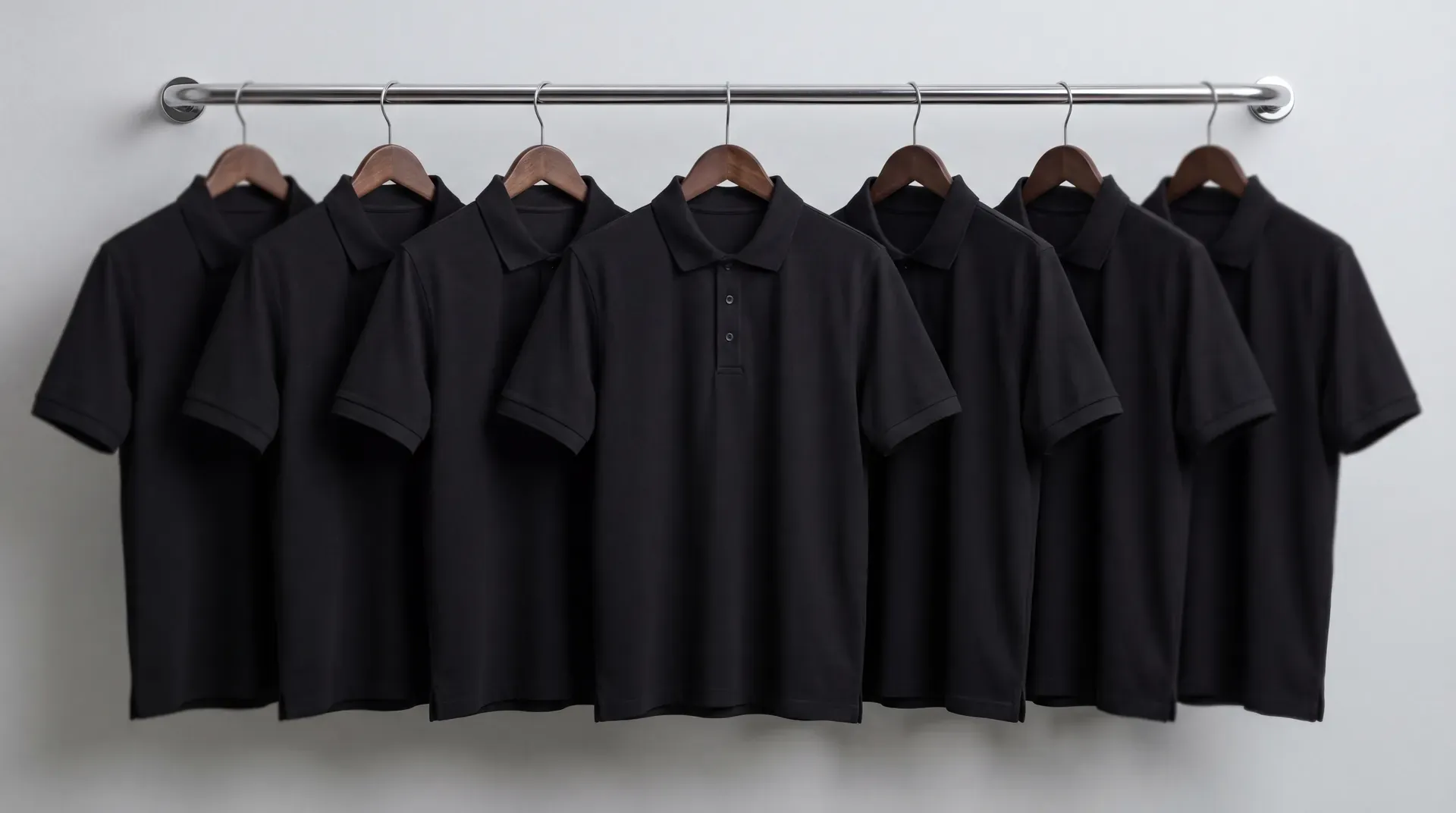
Every year, corporations spend billions on branded merchandise that inevitably ends up stuffed in the back of closets, donated to thrift stores, or simply thrown away within weeks of distribution. The corporate polo with the stiff embroidered logo that severely curls at the collar. The tech-conference t-shirt that pills aggressively after a single wash cycle. The branded hoodie that shrinks two full sizes by December. This is not corporate identity. This is corporate waste—and the economics behind it are staggering.
The global corporate gifting market exceeds 900 billion dollars annually, with the uniform and corporate apparel segment alone accounting for nearly 28 billion dollars. Yet, the vast majority of this budget funds highly forgettable products that inflict more damage on brand perception than they do good. When an employee or a client wears a cheap, ill-fitting branded garment, the primary message broadcast isn’t the company logo—it is the low quality standard the company is willing to accept. Every drooping collar and fading print makes a definitive brand statement, whether management intends it to or not.
The paradigm shift is already underway. Through 2025 and 2026, roughly one-third of all corporate uniform procurement has aggressively pivoted toward sustainable, premium-quality materials. Leading organizations are finally realizing what consumer luxury brands have known for decades: one exceptionally crafted garment generates exponentially more brand equity than ten disposable ones. Procurement strategies are moving decisively from massive quantity distribution to deliberate, high-value curation.
Consider the basic math. A 15-dollar promotional polo might endure three months of semi-regular wear before the deterioration becomes visually unacceptable—collar droop, severe color fade, and total shape loss. Annualized, that equates to 60 dollars per year, per employee, actively funding a continuously degrading impression of your brand. Conversely, a properly engineered polo—knit at a dense 340 GSM from mercerized Pima cotton with a ribbon-reinforced collar—maintains its exact form, rich color, and structural integrity for years. The true cost-per-wear drops below 50 cents within the first year alone. More importantly, the brand impression does not degrade; it solidifies with every single wear.
This is not a pitch for luxury. It is a strictly logical procurement argument. The Total Cost of Ownership (TCO) for a meticulously engineered garment is significantly lower than a cycle of disposable replacements. The brand impact is immeasurably higher. Employee satisfaction—often unquantified but acutely felt—rises substantially. People absolutely notice when their employer invests in a garment they genuinely want to wear outside of the office. They notice even more when the company chooses not to.
Increasingly, this has also become an unavoidable sustainability argument. Corporations touting strict Environmental, Social, and Governance (ESG) commitments cannot maintain credibility while simultaneously pumping thousands of disposable, plastic-based polyester garments into landfills every year. The total carbon footprint of manufacturing, globally shipping, and ultimately disposing of ten cheap polos vastly outweighs the footprint of producing two highly engineered ones. The most sustainable corporate garment in existence is simply the one your team actually wants to wear—and continues wearing for years.
The dialogue surrounding corporate apparel is fundamentally shifting from "What is the absolute lowest per-unit cost?" to "What generates the highest per-wear value?" This reframing overwhelmingly favors manufacturers who invest deeply in material science, structural integrity, and long-term garment performance over those racing to the bottom on price.
At True Base 96, our production infrastructure in Türkiye was built over thirty years for exactly this caliber of partnership. With our fully vertically integrated manufacturing, zero-water ozone finishing capabilities, and rigorous 8-to-14 step hand-inspection protocols per garment, we simply do not produce promotional merchandise. We manufacture garments engineered specifically to represent the uncompromising standards of the organizations whose people wear them.
The partners we align with understand one critical truth: what your team wears is the most visible, physical manifestation of how you build your business. If your company builds with precision, your people should dress with precision. If your organization’s core value is durability, your apparel must physically demonstrate it. Corporate identity does not start with a vector logo file emailed to a local print shop. It starts with the integrity of the fabric that logo is anchored to.
The era of disposable corporate apparel is dead. The standard that replaces it won’t be defined by the marketing agencies talking about quality, but by the manufacturers who have spent decades engineering it.