
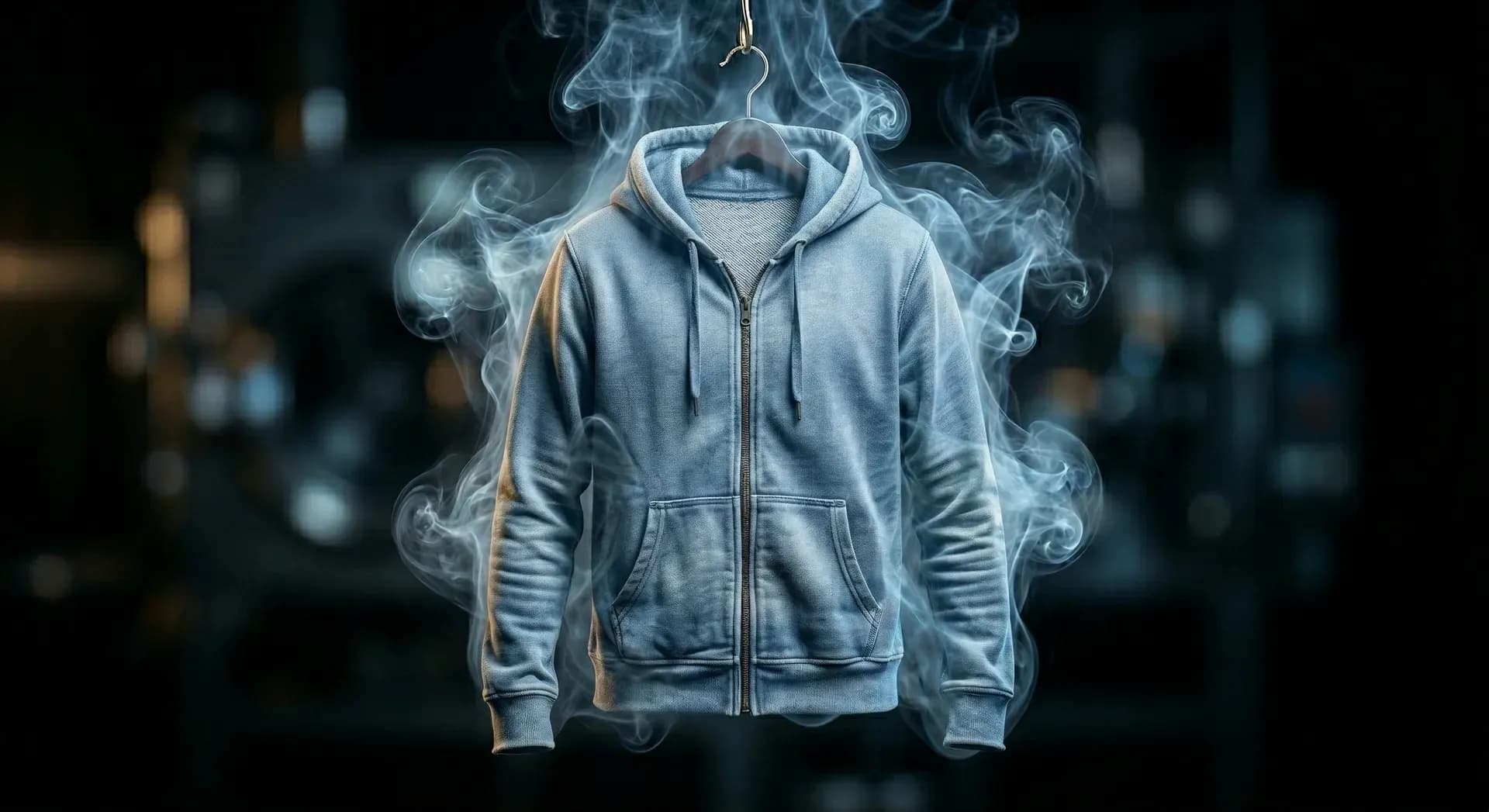
Every garment undergoes finishing—a critical post-sewing process that dictates its final hand feel, color depth, and surface texture. In conventional manufacturing, this means endless wash cycles packed with water, enzymes, softeners, and sometimes pumice stones. A single industrial washer can drain 150 liters of water per kilogram of fabric in just one cycle. Scale that up to a 5,000-piece production run, and the environmental impact becomes catastrophic.
Ozone finishing completely rewrites this process by using O3—a molecule made of three oxygen atoms—as the active agent instead of water. The garments are placed into a sealed drum where ozone gas is introduced under strictly controlled concentration and humidity levels. The O3 molecules react with the fiber surface, breaking down residual sizing agents, softening the fabric, and imparting a naturally faded, matte texture—all without drowning the fabric in water.
The results speak for themselves. Our ozone-finished pieces require up to 95% less water than traditionally finished garments. Energy consumption plummets because there are no massive vats of water to heat. Chemical usage drops to near zero because the ozone simply reverts to standard oxygen (O2) within minutes, leaving absolutely no residue on the fabric or in the environment. In short, there is virtually no wastewater left to treat.
We utilize this technology across our entire Ozone collection—hoodies, joggers, and overshirts engineered with a distinct surface character. This texture isn't just a cosmetic trick; it is the direct outcome of the finishing science. When you touch an ozone-finished 480 GSM French terry, the difference is undeniable: a softer nap, a muted sheen, and a naturally aged look without any structural degradation. This is what responsible manufacturing looks like when it's driven by engineering, not just marketing claims.